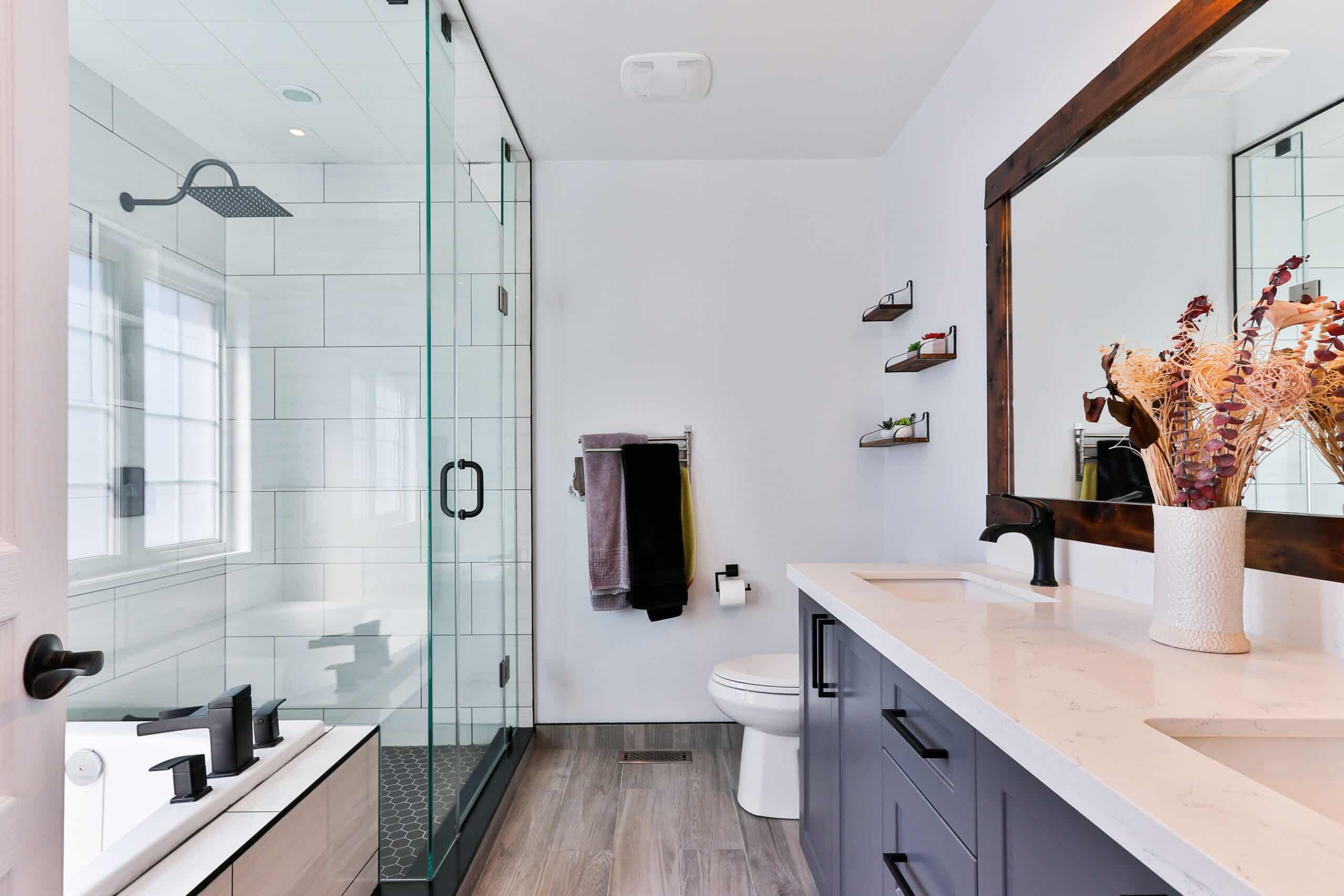
A bathroom renovation does two jobs at once. It makes everyday life easier, and it can add to your home’s value. The nice thing about bathrooms is that you decide how far to go. You can build a spa-like primary bathroom, or simply freshen things up with new fixtures and paint. Before you start, it helps to have a clear plan. There’s a lot you could do, and it’s easy to get carried away and spend more than you need to.
Bathroom Renovation Cost
This guide walks you through the main types of bathroom projects, what they cost in Canada in 2026, and a few simple ways to save.
Reasons to renovate
Start with why you want to renovate. Knowing your reason makes it much easier to set a budget and plan the design. Are you tired of how the bathroom looks and feels? Do you want a little more comfort in your primary bathroom? Or are there simply too few bathrooms for everyone in your home? There’s no wrong answer. Take a look at your home and what your family needs.
Aging-in-place
If you love your home and plan to stay, it’s worth thinking ahead. Bathrooms can get harder to use as we get older, and slippery floors and high tub walls can become a real safety concern. If you’re renovating anyway, build in a few aging-in-place changes now. It also makes life easier for visiting parents or grandparents.
Types of bathrooms
“Bathroom” is a general word, but when it comes to renovating, there are a few specific types to think about. Your project can be as simple or as detailed as you like, and the work involved changes with your goals. Knowing the common types gives you a head start on planning and design.
Powder room or guest bathroom
This is also called a “half bath” because it only has two fixtures: a toilet and a sink. It gives guests an easy bathroom to use without going upstairs. Most powder rooms are on the main floor, close to the living or dining room. Because there’s less to it than a full bathroom, it’s one of the more affordable bathrooms to add or update.
Three-fixture
A three-fixture bathroom has a toilet, a sink and a shower in a small floor plan. Often all three line up along one wall, across from the door, but the layout can change to suit your space. The goal is to keep the floor open. Like a powder room, it’s handy for guests or as a main-floor bathroom. Attach one to a guest room and it starts to feel like a private suite.
Full bathroom
A full bathroom is the classic setup: a tub and shower, a vanity sink and a toilet. Every home has at least one, usually near the bedrooms. More than one full bathroom adds value, but they don’t all need a tub. A shower-only full bathroom works well, as long as at least one other bathroom in the house still has a tub.
Utility bathroom
This layout combines a bathroom with another use, like laundry or a dressing area. It has the usual shower, sink and toilet, plus room for something extra. A laundry combo usually has a stacked washer and dryer to save floor space. A dressing-room combo is usually part of a primary suite, with a walk-in change area that works like a walk-in closet. Basement bathrooms get the most out of this layout, since every square foot needs to pull its weight.
Primary suite bathroom
A primary bathroom (often called a master bathroom) is all about space, comfort and privacy. It’s attached to the main bedroom and often has a calm, spa-like feel. These renovations usually cost more than a standard bathroom. A primary bathroom may have both a walk-in shower and a separate soaker tub. Because it’s designed around the people who use it, no two are the same. A well-done primary bathroom is one of the features buyers notice most.
Renovation vs remodel
People use these two words to mean the same thing, but there’s a real difference, and it affects your budget.
Renovation
A renovation keeps the layout the same. You’re updating what’s already there. That could be as small as new fixtures and lighting, or as big as a new walk-in shower or tile floor. Renovations usually cost less, and many don’t need a permit. Depending on the work, some parts can be done yourself and some are best left to a pro.
Remodel
A remodel changes the layout. That might mean making the room bigger or moving the toilet, shower or vanity. It costs more and usually needs a contractor. Moving plumbing or adding electrical work will usually need a permit before work starts. A remodel can fix a badly designed bathroom in a way a simple update can’t. It costs more up front, but it can make a much bigger difference to how the room works.
Bathroom renovation cost in Canada
Your cost depends on the work involved, design help and labour, and the materials you choose. Here’s what Canadian homeowners can expect for a typical bathroom in 2026:
Average cost: $18,000
Low-end cost: $6,000
High-end cost: $40,000+
Where you live makes a big difference. Labour in Vancouver and Toronto often runs 30% or more above the national average, while smaller centres, Quebec and Atlantic Canada tend to come in lower. Labour is often 40 to 50% of the total, and licensed plumbers and electricians typically charge about $75 to $150 an hour.
Bathroom size, materials, and the fixtures and finishes you pick will also change the price. Making the bathroom bigger adds the most. New framing, drywall, plumbing and wiring all need to be part of the plan and the budget. For the most accurate number, get a quote from a contractor who can see your space.
Expanding cost: $5,000 – $25,000+
Fixture cost
Fixture prices vary a lot depending on quality. This can be a good place to save, but some fixtures are worth spending a bit more on. Anything you use every day, like the toilet or shower valve, should be good quality so it doesn’t wear out early and need costly repairs. Here’s what to expect for the fixture itself, before installation:
Toilets and sinks: $250 – $2,000
Showers: $500 – $5,000
Vanity: $400 – $6,000
Countertops: $300 – $3,000
Per square foot
Square footage is another way to estimate your cost. Just know that bathrooms cost more per square foot than almost any other room. The plumbing, fixtures and number of trades are about the same whether the room is 40 or 60 square feet, so smaller bathrooms have a higher price per foot.
Full renovation of a standard 40 sq ft main bathroom: about $350 – $650 per square foot
Shower remodel
A shower update can be a project on its own, and it’s one of the most popular. Many homeowners take out the old tub and shower combo and put in one large walk-in shower. Glass enclosures are still a favourite because they make the room feel bigger and brighter. In a primary bathroom, some people add a separate soaker tub, but that’s a personal choice.
Cost: $3,000 – $15,000
Walk-in shower remodel: $8,000 – $20,000
Primary bathroom and aging-in-place
Primary bathroom remodels focus on comfort, quality materials and more space. Many include a soaker tub, a walk-in shower, a single or double vanity, heated floors, and custom cabinets and fixtures.
Primary bathroom cost: $25,000 – $60,000+
Aging-in-place changes depend on what you need. Common updates include a larger walk-in or curbless shower, grab bars, a shower bench, a comfort-height toilet and non-slip floors. Drawers are easier to use than low cabinet doors. If wheelchair access matters, widen the doorway and leave more open floor space. Even if you don’t need grab bars yet, ask your contractor to add wood backing in the walls now. It costs very little during a renovation and a lot more later.
There’s help with the cost, too. If you’re 65 or older, or you qualify for the disability tax credit, the federal Home Accessibility Tax Credit lets you claim up to $20,000 a year in eligible renovation costs. Check the Canada Revenue Agency’s website for the current rules before you start.
Aging-in-place cost: $2,000 – $15,000
Permits
Whether you need a permit depends on the type and size of the work. Simple updates, like new fixtures in the same spot or fresh paint, usually don’t need one. Moving plumbing, adding wiring or building a new bathroom usually does. Every city sets its own rules and fees, and many base the fee on the value of the work. Check with your city before you start. If you’re working with a general contractor, they should know what’s needed and include it in your quote.
Permit cost: $150 – $1,500
Money-saving fixtures
A bathroom renovation can add up, but there are ways to save without cutting corners. Water-saving fixtures are one of the easiest. They lower your water and energy use, so they keep saving you money long after the work is done.
Low-flow showerheads: A standard showerhead uses up to 9.5 litres (2.5 gallons) per minute. A WaterSense-labelled showerhead uses no more than 7.6 litres (2.0 gallons) per minute, and still feels like a good shower.
Low-flow and dual-flush toilets: Most standard toilets use 6 litres (1.6 gallons) per flush. A high-efficiency toilet uses 4.8 litres (1.28 gallons) or less. A dual-flush toilet lets you use a smaller flush for liquid waste and a full flush for solids. Some cities offer rebates on high-efficiency toilets, so check with your local water utility before you buy.
Aerators: These small screens twist onto your sink faucet. They cut the amount of water you use without making the water pressure feel weak.
Refinishing your vanity: If your vanity is solid, think about refinishing it instead of replacing it. Painting or refacing is an easy project that gives it a whole new look. A new vanity, installed, costs about $1,000 – $6,000. Refinishing the one you have usually costs $200 – $1,000.
Bathroom ROI
Along with kitchens, bathrooms are one of the best rooms to renovate if you care about return on investment (ROI). If you plan to sell, an updated bathroom catches buyers’ attention. Even small cosmetic updates can help a home show better.
These ranges come from the Appraisal Institute of Canada, as shared in CIBC’s guide to home renovation returns:
Bathroom renovation: 75% – 100% recoup
Kitchen renovation: 75% – 100% recoup
New flooring: 50% – 75% recoup
Energy upgrades: 50% – 75% recoup
These are general ranges, not promises. A clean, mid-range update in a popular neighbourhood tends to land near the top. A very personal design, or a luxury bathroom in a modest home, may return less.
DIY vs hiring a professional
Some parts of a bathroom are fine to do yourself, and some are best left to a pro. It comes down to your time, your skills and the quality you want. A full DIY renovation can save money at the start, but there’s no warranty if something goes wrong. Some buyers are wary of DIY work, and any problems or repair costs are yours to deal with.
With a professional, you may spend more up front, but you often save in the long run. A reputable contractor stands behind their work, keeps the project moving, and may get better prices on materials through their suppliers. Licensed plumbers and electricians also make sure the work meets code, which matters for permits, insurance and resale. You can still mix the two. Doing some of the work yourself and leaving the rest to a pro can save money without giving up quality.
DIY work
Take on the easier jobs yourself, like painting or shopping for fixtures ahead of time. High-end fixtures add up fast, and a well-chosen budget fixture can look just as good. If you have time, you can also do some of the demolition, like pulling out old tile or an old vanity, as long as you’re careful around the pipes. That alone can save $1,000 or more in labour. One important note: if your home was built before 1990, have the materials tested for asbestos before you start breaking anything apart. Refinishing what you can, like the vanity or countertop, also saves a lot compared to buying new. In the end, your bathroom will cost less, and it can look just as good.
Ready to get quotes? Tell us about your bathroom and our team will connect you with verified, reputable contractors in your area. It’s free. Post your bathroom project
Find RenovationFind certified bathroom renovation companies now!
RenovationFind Certified is a symbol of integrity held by only the most trustworthy companies in home improvement, service and maintenance.
This post first appeared on https://blog.renovationfind.com